
JOHN RYLANDS LIBRARY
CONSERVATION WORKS

LOCATION
Manchester

SECTOR
Conservation

CLIENT

ARCHITECT

PROJECT VALUE
£4m

CONTRACT

PERIOD

CONTRACT PERIOD
THE BRIEF
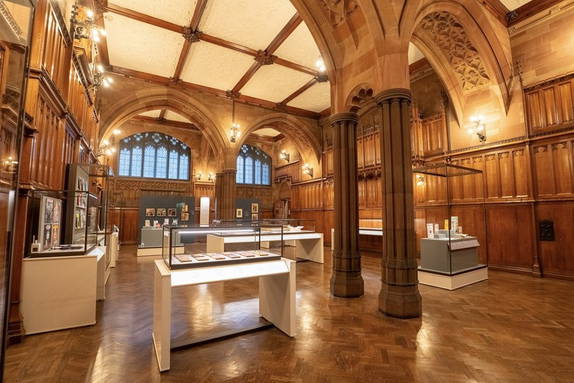
After a competitive tender process, H.H. Smith were delighted to be awarded the contract for the refurbishment of the John Rylands Research Institute and Library at The University of Manchester. The ‘Next Chapter’ project was procured via a 2-stage tender process with a PCSA period.
The Grade I Listed John Rylands Library is one of the finest neo-gothic buildings in Europe and home to internationally important collections of
rare books, manuscripts and archives. The ambitions of the project were to improve the manner with which visitors engage with the Rylands
collections and architecture – opening up and better revealing elements of both – whilst simultaneously enhancing its offer as a research and academic institution.
KEY POINTS
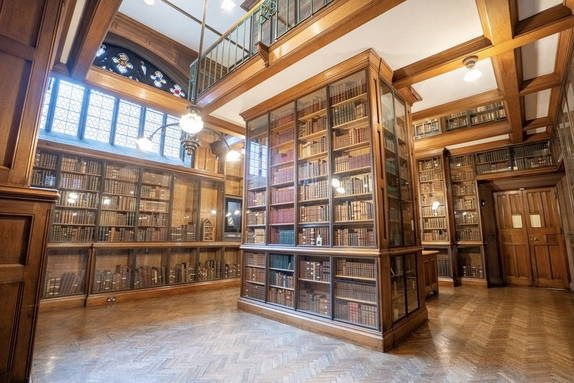
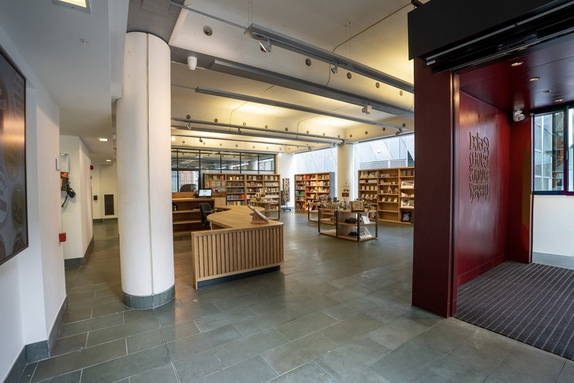
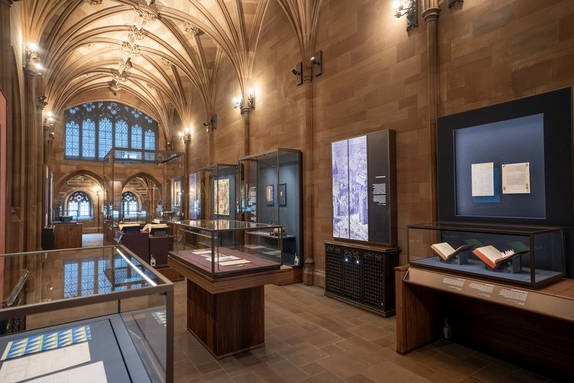
The scheme involved the refurbishment of several areas; including parts of the original historic building, the 1960s developed office space and the
modern extension and main entrance. Specific elements included:
- Reconfiguration of the main entrance by removing the existing revolving door and installing a new entrance and exit strategy with a dramatic new bespoke façade to improve the flow of traffic in and out of the John Rylands Library and enhance the user experience.
- Creation of a bespoke entrance desk to suit the John Rylands Library staff team with bespoke furniture for the team to utilise as they develop the retail environment within the building.
- Redevelopment of the modern ground floor to create a flexible and highquality multi event space with the full integration of various University of Manchester and John Rylands Library systems.
- Replacement of all internal signage to create an easier to follow experience for the general public, seamlessly connecting the newer and historic spaces.
- Creation of a new state-of-the-art advanced Imaging Lab by refurbishing a previously underused storage area and installing individual bays within it to provide no light areas, with new and improved access into this room.
- Refurbishment and transformation of the exhibition spaces to provide best in class display facilities which allows the prized artifacts to be exhibited in an environment that balances preservation with accessibility, whilst also connecting into the intruder alarm and lighting control and AV systems.
- Installation of new Mechanical and Electrical systems, housed in a new rooftop plantroom, to improve the environmental conditions in numerous rooms and areas throughout the building.
- Development and provision of upgraded services, including lighting, data, Wi-Fi, power, ventilation, and security.
CHALLENGES
As with all buildings of such historic and cultural significance there were many challenges involved in delivering the project in a sympathetic way in order to achieve the design teams’ vision and highlight the existing beauty of the building. Protecting the historic structure and original craftmanship was of paramount importance. H.H. Smith drew upon the skills and past experiences of our specialist tradesmen to assist with the design and installation of a range of bespoke protection measures, such as pressure pad protection screens, to ensure no fixings or adhesives had a detrimental effect on the existing fabric.
At the John Rylands Library it is not just the building fabric that is of great value, but also the priceless collections it houses. To ensure these were kept safe during the project, H.H. Smith developed robust bespoke procedures such as; special fire watch permits, strict fire procedures and fire alarm management protocol to integrate with the argon gas fire damper system used at the John Rylands Library. We were also tasked with ensuring any new building materials matched those used over 100 years ago.
This involved historic research, sampling and even ageing new materials to seamlessly match the existing. Some of the design teams concepts were as much works of art as they were structures. The bronze arch that is the centrepiece of the new entrance scheme took over 2 years in its design development. H.H. Smith called in specialist subcontractors for the design process linking up different trades and skill sets in order to successfully create this new local landmark. These sensitive upgrades have enhanced the visitor experience and will allow this much loved building to continue to be a leading centre for research and public engagement and be enjoyed by the next generation.