
HAIGH HALL
CONSERVATION WORKS

LOCATION
Wigan

SECTOR
Conservation

CLIENT

ARCHITECT

PROJECT VALUE
£6.2m

CONTRACT

PERIOD

CONTRACT PERIOD
THE BRIEF
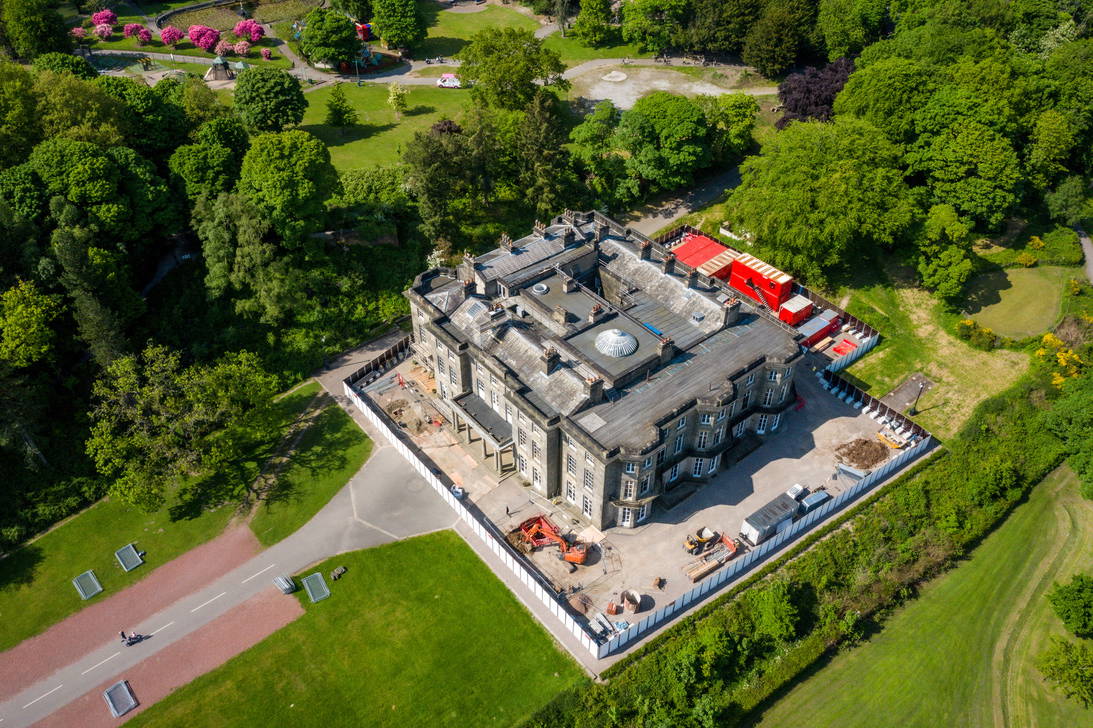
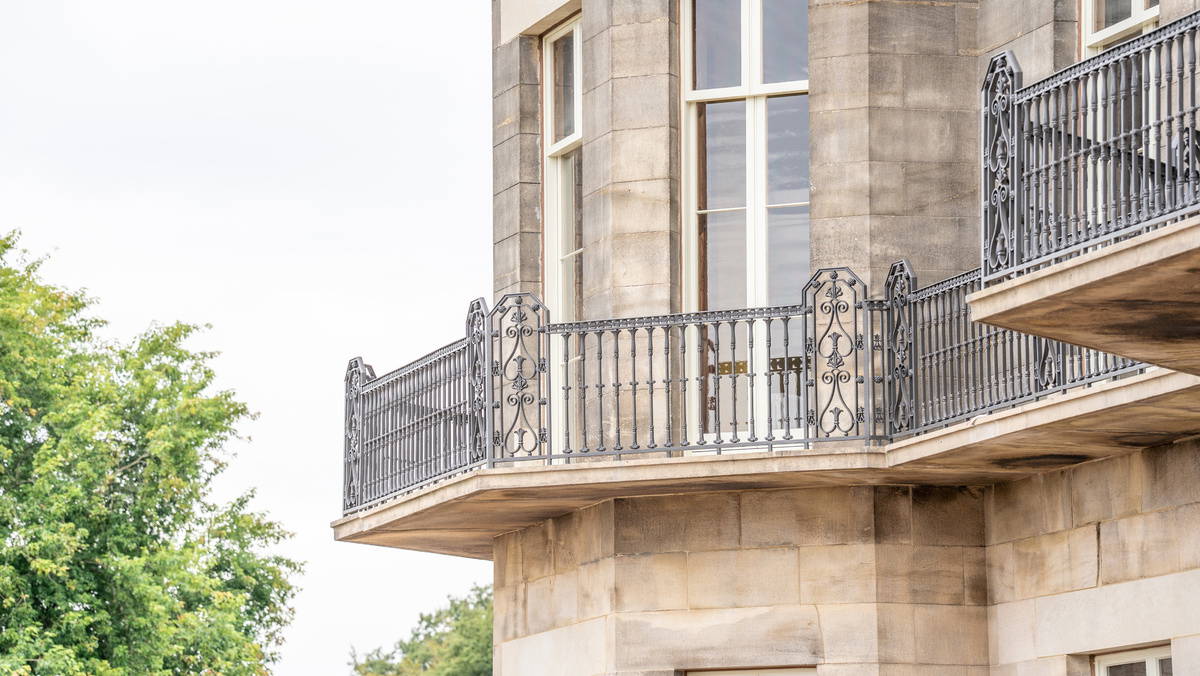
fabric repair and restoration of Grade II* listed Haigh Hall, which is
situated in Haigh Woodland Park in the Borough of Wigan. The
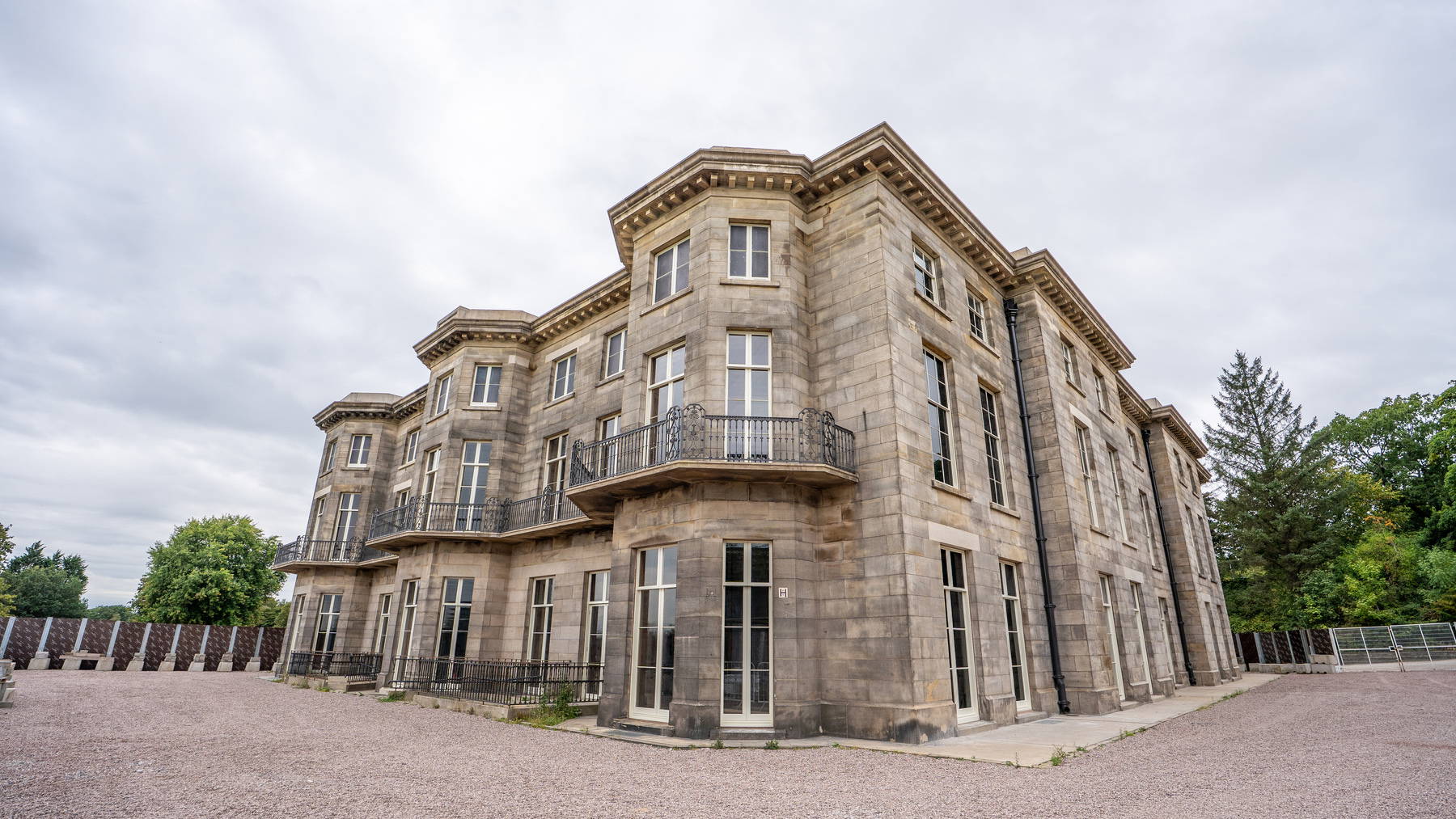
works consisted of repairs to; windows, chimneys, rainwater goods,
doors, stonework, balconies, heritage roof lights, roof replacement,
and a replacement lightening protection system. Plus, internal
asbestos and dry rot removal and below ground drainage repairs.
KEY POINTS
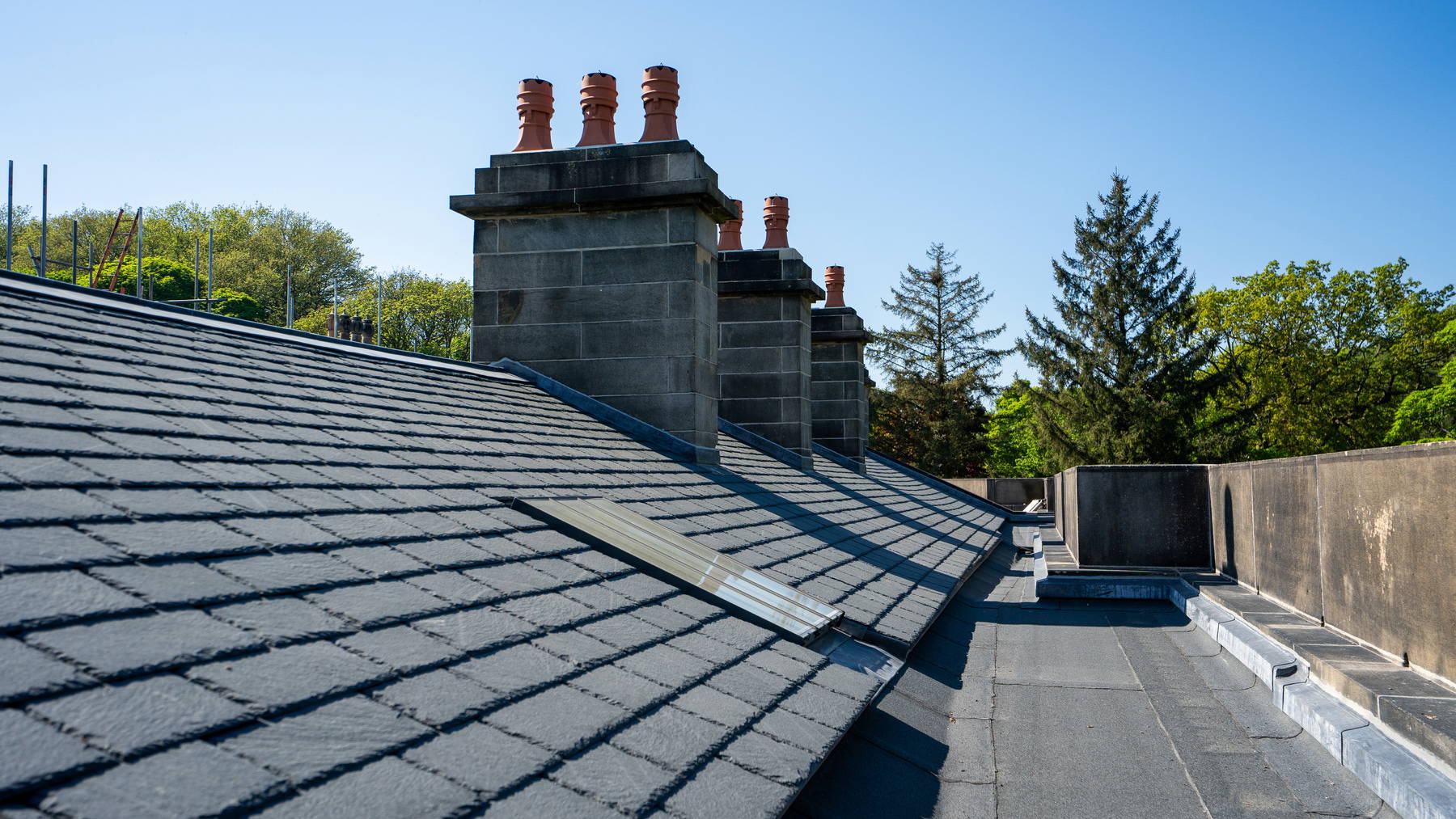
Haigh Hall is made up of 8 different roofs, including Bauder flat roofs, Burlington slate roofs consisting of; double pitched roofs, single pitched roofs and gable roofs. All the roofs were unique and required different venting details and building techniques. The flat roofs required a 1:60 fall to ensure optimal drainage and effective management of rainwater. This gradient directs water seamlessly toward the newly installed lead sumps and outlets, enhancing the overall performance and longevity of the roof. To facilitate this system, extensive modifications were made to the joists and structural timbers to further enhance the durability of the roof.
In addition to this, rockwool insulation was installed on netting, whilst carefully maintaining an airgap. This not only enhances the buildings thermal efficiency but also promotes optimal roof ventilation. The slate roof required significant repairs to the rafters and underlying timbers prior to the install of the specified felt, batons and slates. Existing timbers forming the foundations of the slate roofs were carefully treated to prevent the development of mould and dry rot, further improving the integrity of the roof. For the reslating, high quality Burlington slates were sourced locally to ensure both aesthetic appeal and environmental sustainability. The Burlington slates were delivered to site, sorted for size and holed and cut as they would have been during the original construction of the building. Whilst a number of removed slates were temporarily stored on site during the works, any that were not reused have been returned to Haigh Hall Woodland Country Park, where they will be repurposed for future use throughout the park. The roof also features 19 unique chimneys, each with distinct stacks and hats. For those that required replacement, precise scans were taken to ensure a perfect match with the existing structures. These carefully crafted replacements were then installed with great care, alongside the remaining originals. All leadwork was installed to LSTA guidelines. In order to do this, much of the gutters had to be redesigned and rebuilt by our own in-house site joinery team in order to meet current regulations. More ornate leadwork was also installed on the pinnacles that held the weathervanes. New cast iron rainwater goods (Hoppers & Downpipes) – were replicated to match the originals at a local foundry, Hargreaves. The historic rooflights that required replacement were thoughtfully substituted with sympathetic, high-performance rooflights, all of which received prior approval from the council’s conservation officer and architects.
Meanwhile, those that could be repaired were meticulously restored, ensuring the preservation of their historic features. This careful attention to detail reflects our commitment to maintaining the buildings original features.
CHALLENGES
Haigh Hall is located in a busy public park, therefore H.H. Smith
developed a bespoke delivery and logistics plan. This took into
consideration park opening times and ensured the safe passage of
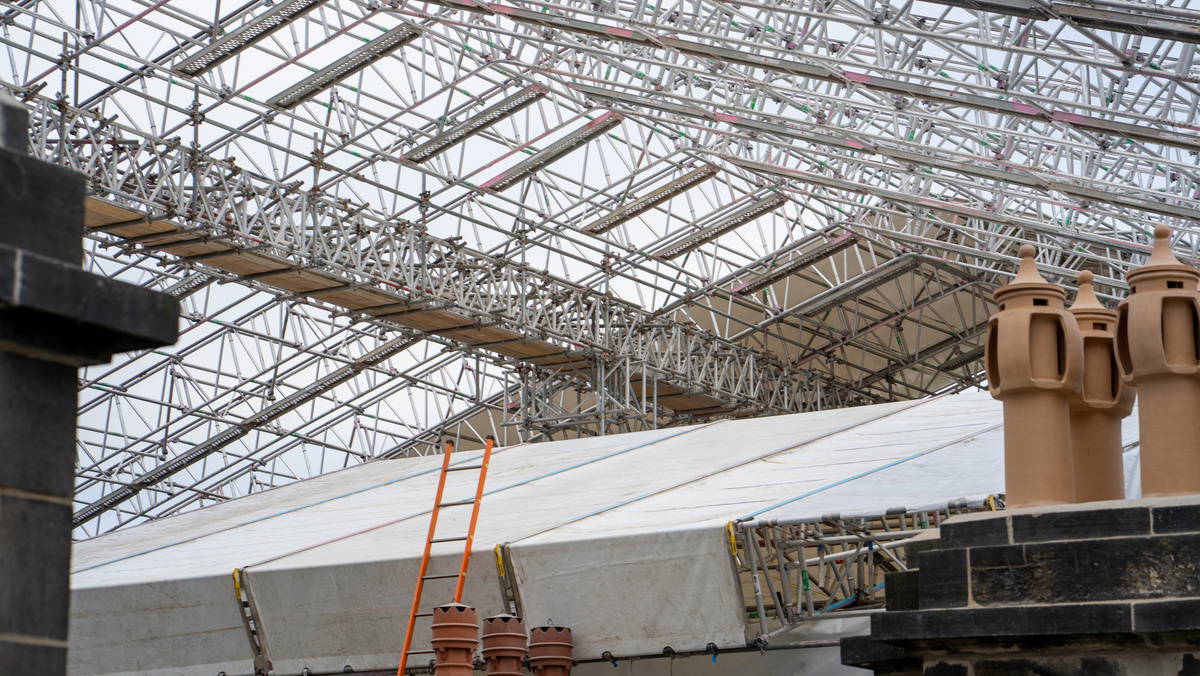
park users at all times. The scaffold presented a major challenge, as
due to the Hall being a listed building it could not be fixed to the
building, and a complex design was required to ensure it was fully
independent of the existing structure. In addition, a full
weatherproof temporary roof covering was installed, and this
significant engineering design allowed the roofs to be replaced
without the potential risk of water ingress causing damage to the
interior of the building. Each aspect of the roof posed unique
challenges, particularly the work above the ornate plaster ceiling.
H.H. Smith took extreme precautions to protect and support the
ceilings below, ensuring they remained undamaged whilst essential
repairs and replacements were carried out to timber joists.
Moreover, each roof presented a variety of challenges which in turn
lead to numerous bespoke details.
Throughout this, H.H. Smith worked closely with the conservation officer and appointed architects, Purcell, to ensure that these bespoke details were recreated as they would have been originally, rather than the
unsympathetic repairs that had been undertaken previously.